One of Many of Ralph Winter’s Secretaries

Dr. Ralph Winter had many secretaries over the years that he worked at Fuller Theological Seminary and the U.S. Center for World Mission.  One is described by Glenn Schwartz in a memorandum he wrote to the faculty and staff of Fuller’s School of World Mission (SWM) on February 6, 1979.  He mentions that he has had a visit from Judi Kunkel, who informed him that she will be departing the Seminary’s employ in a few weeks.  Judi started working at SWM for the first time in 1974 as Ralph Winter’s secretary.  For two years she was this writer’s secretary in the SWM main office.  In 1977 she took the role of admissions coordinator and served in that office until this date.  Schwartz states, “Judi brought to us unique cross cultural skills from her missionary experience in Bolivia.  She also took many courses in the SWM thereby becoming thoroughly familiar with our program.”  Judi plans to work with a Pasadena based organization known as Adventure with the Bible.  She is enthusiastic about her new ministry and everyone at SWM prays the Lord’s special blessing on her as she transitions out.  She is welcome to continue in the fellowship of the SWM family.  The SWM is sorry to lose Judi from the team and asks for prayers that the Lord will guide those who will be finding her replacement.


This Means War!

Dr. Ralph Winter wrote an article entitled “In Pursuit of the Full Gospel” on October 26, 2004.  He starts off by asking what is inadequate about the statement, “The over-arching vision within the Frontier Mission Fellowship (FMF) group of projects is to see all unreached peoples reached with the gospel and the kingdom to come among them.  In evangelical terms we can know when a group is reached when there is an indigenous church planting movement among them.”  Winter says that this well describes the perspective when the FMF was founded, but now things are both simpler and more complex.  While the priority is still to reach people groups with no access to Christ, merely witnessing a church planting movement among them has never been all God desires accomplish.  The Kingdom coming among them is helpful but woefully unspecific.  In his current thinking, Winter speaks of four levels of strategy and purpose.

Level 1—Seeing people “saved”

Level 2—Winning them to the Lordship of Christ as members of His family

Level 3—Glorifying God

Level 4—“Distinguishing evil from God and fighting ‘the works of the Devil’ as a means of glorifying God, that is, understanding the lordship of Christ as involving us in an all-out war against evil, disease, corruption, a war in which we can expect suffering, hardship and death.”

Winter writes that his point of view has changed regarding the shift away from a focus on man vs. God, a polarization that enabled religion to be commercialized during the Reformation and before and after.  Religious functionaries in many societies would sell a service that for the fee allows an improved relationship with God or the gods.  Yet the New Testament presents two sides, the god of this world and God with man working together to destroy the works of the Devil to reclaim the full glory of God.  The “salvation of man” emphasizes a balanced view of the serious division between Satan and God, a dichotomy in which man was created to be on God’s side.

Winter goes on to admit that Satan has corrupted man and acquired his help in opposing God such that man could be on either side of the battle.  Much of the conflict between man and man is explained by an absence of a clear understanding of the greater war between Satan and man and Satan and God.  Winter believes the nations of man would be immediately and dramatically unified if the great enemy Satan is suddenly exposed.  He states, “If humans could wake up to the fact that their far greater enemy is rampant in the form of disease germs they might well rally around that common enemy rather than fight each other.”  In war times the fighting is not for status, position, and fame but due to the far greater looming common enemy.  Logically, Satan strategically influences humans by leading them blindly to downplay and ridicule or at least misconstrue his very existence, meaning the existence of an intermediate being with awesome power who wickedly opposes God and man.  If human beings concentrate fully on their own waywardness toward God, this tactic easily monopolizes their consciousness and minimizes their awareness of the larger battle.  Most theologizing concerns “getting man right with God” but Winter is confident it should be restoring full glory to God by differentiating His works from Satan’s.  Otherwise, Satan’s final achievement is the human delusion that evil is from God due to His “mysterious purposes.”

War Scene

The Winters’ Medical Paperwork

On February 2, 1967, the Medical Office of the Commission on Ecumenical Mission and Relations of the United Presbyterian Church in the United States of America sent a letter to Ralph and Roberta Winter at their home in South Pasadena, California.  The writer is Mrs. Bonnie Barnum and she says that Mrs. Constance Smith, who is not in this office anymore, sent the Winters a reminder about getting their physical examination reports in to this office.  They had replied to the reminder stating that they would be able to send the forms in by the end of December.  It is February by now, and the medical office staff realize how very fast time passes, but they really would like to have the forms in.  Mrs. Barnum mentions, “Dr. Scovel will look them over and send you recommendations which will also take time and then it will be time to send you final papers for medical clearance for return to the field.”  So the sooner they send them in, the easier it will be for everyone.  If the Winters send their forms in by the end of the current month, they will have one month’s time to complete the recommendations before Mrs. Barnum sends them the final papers.  This is cutting it fairly close.

Roberta Winter wrote a note three days later to Dr. Fidellis and gives him the forms to fill out.  She asks for the two half-sheets with the note at the top to please be returned to her at home.  The others the doctor is to send to Dr. Theodore Stevenson at COEMAR in New York City.  Roberta remarks, “We are sorry there is so much, but will be glad to pay additional for your time, if necessary.  Thank you.”


Helping A Friend Dr. Winter Made Decades Before!

Ralph and Roberta Winter received a letter from Ralph Winter’s friend going back to his youth, Dan Fuller.  It is dated November 25, 1994.  He begins by saying that he knows through their mutual friend Phil Foxwell that the Winters or some of their people have been interceding during the severe time of testing Fuller has gone through in the last 20 days as a Fuller Evangelistic Association board member.  The spiritual battle appears to be over now.

He is returning his focus to getting his manuscript Overcoming the Great Omission published.  Baker Book may be interested.  He has reached the point of needing an illustration suitable for the Inter Varsity types who help make up his present constituency of “walking in the light,” or deliberating on a possible decision by gathering all the possible relevant facts in mind first.  The vision ought to be panoramic rather than tunnel.  In an earlier draft, Fuller used a Readers’ Digest story about how to decide whether it is better to lease or buy a car, and another earlier one on whether it is wiser to obtain a fixed rate mortgage on a house or one with variable rates.  Nonetheless, neither of these illustrations are fitting for college students.  He writes to Winter, “From a long time ago I remember how you were about to go to Columbia University for grad work in anthropology, but then you found out something that made you switch to Cornell.  That sort of a decision does apply to Inter Varsity types!”

So Fuller asks his friend Ralph if he would be so kind as to take three minutes to call him on the telephone to tell him three or four elements in that decision that would be useful.  Fuller will copy it down on his laptop computer so Winter will not have to say it twice, and since he has to finish his manuscript by the end of the day on November 29, Fuller will not try to spend any of Winter’s time talking about other matters.  Prior to his signature he calls himself “Your friend from way back.”

OLYMPUS DIGITAL CAMERA

Ralph D. Winter, Young to Old

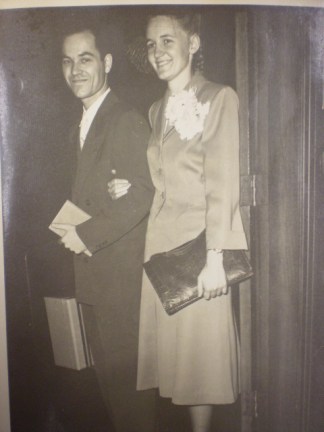
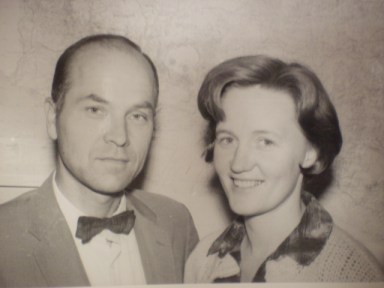
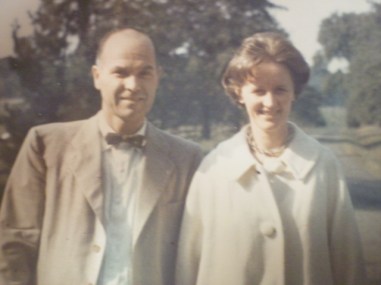
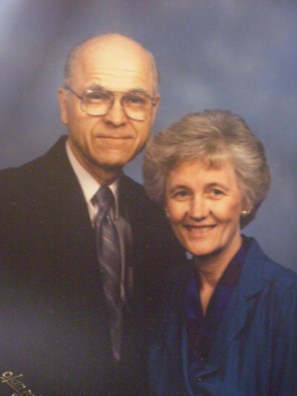
Since variety is the spice of life, this post will be pictorial rather than textual with a series of photos of Dr. Ralph Winter at different ages throughout his life.  Specifically these cover him as a child, a teenager, a man of marrying age, a middle aged man and a senior citizen.  Enjoy this chronological collage!

OLYMPUS DIGITAL CAMERA

OLYMPUS DIGITAL CAMERA

OLYMPUS DIGITAL CAMERA

OLYMPUS DIGITAL CAMERA

OLYMPUS DIGITAL CAMERA


Brief Return To The Mission Field

Ralph Winter and his second wife Barbara were sent an e-mail message on July 10, 2005 with “Guatemala Trip” in the subject line.  The writers are a couple named Bill and Joyce Peck.  [When the Winters lived in Guatemala 45 years earlier, they served alongside a couple by the names of Dudley and Dorothy Peck].  Bill and Joyce Peck say that they have just returned from a wonderful trip to Guatemala.  Along the way they saw Candelario, who was deeply moved to hear that Ralph and Barbara Winter may come to visit.  Candelario lives with his son Miguel and Odelia Perez.  The Pecks spoke with Ramon Diaz, who is doing a fine job of organizing and teaching at the Mam Center [where the Pecks and the Winters served together from 1957 to 1966].  Ramon Diaz gave them the telephone number of his father Ruben David Diaz Mendez.  They mention, “The directions to his home are Kilometer 215 (from Guatemala City, with Quetzaltenango being at Km. 200, on the road to San Marcos from San Juan Ostuncalco.  That is about 3 Km. away from San Juan, just up the hill from the straight piece of road which goes out past the Mam [Center].”  Several people in Guatemala commented that they would love to have Ralph and Barbara Winter come and visit them.  The Pecks sign with all good wishes.  [Ralph and Barbara Winter did go to Guatemala with his daughters and grandchildren in January of 2006, the last time he was ever there].

OLYMPUS DIGITAL CAMERA

Keeping In Touch With The Home Church

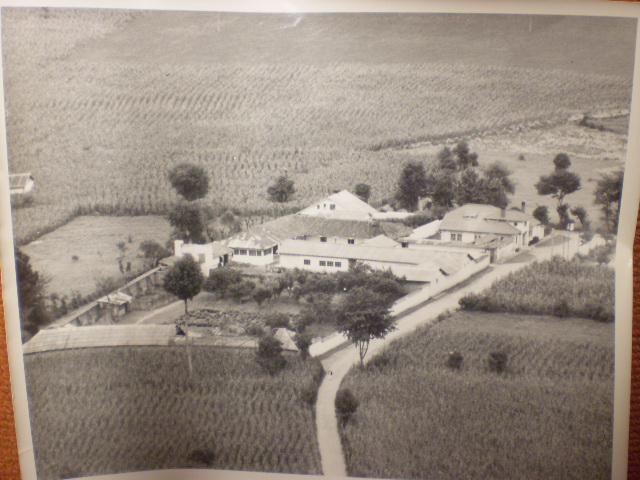
On October 11, 1957, James Henry Hutchins representing Lake Avenue Congregational Church in Pasadena, California typed a letter to Ralph and Roberta Winter, who were then in San Jose, Costa Rica.  After addressing them as friends, he conveys the information that the church has received the large picture the Winters spoke of sending to them.  He assumes it is of a Guatemalan family and their house.  It will be posted at the church with the hope that “it will create real interest in the work in Guatemala.”  It is also the hope that in due time the “slide-tape” program can be arranged entitled “over night to Guatemala” and this writer will plan to secure it from Mrs. Clewett.

In response to Ralph Winter’s question about who should be receiving the Winters’ “Shoptalk” letters at the church, and of course, the writer acknowledges that many people would be interested in it but he also recognizes the Winters’ mailing list cannot be too large, he thinks of two individuals who would benefit from receiving them.  One copy could be addressed to the president of the missionary society at Lake Avenue Church, 393 North Lake Avenue, and another copy go to Mrs. B.E. Chamberlain.  “This would make the letters available for the Missionary Society meetings and for the Missionary Committee and be in the hand of Mrs. Chamberlain.”  Hutchins closes by writing that the church looks forward to seeing the picture of the Winter family, which will have greater interest than the one of the Guatemalan family although people will be glad to see that one too.  Before he signs he says that he is very cordially theirs.

OLYMPUS DIGITAL CAMERA

Dr. Winter’s Involvement in the Finances

Dr. Ralph Winter’s colleague Phil Elkins at Fuller Theological Seminary forwarded a memo to him that he believes he should have a copy of due to Winter’s responsibilities to examine the financial structure of the School of World Mission program.  Glen Barker’s secretary phoned to say Barker agrees to the memo’s correctness.  It is dated March 10, 1976 and is originally to Dr. Art Glasser and Phil Elkins.

It begins by stating the note is an attempt to make sure Barker (the writer) accurately understands the decision that was made in a meeting five days before.  “In the light [of] the particular needs for funds to hire Bob Douglas as both [an] academic advisor for the missionary candidate program and as an adjunct faculty member, it [has been] agreed that full cross-over tuition would be given for all courses taught in the School of Theology by both full and adjunct School of World Mission faculty members.”  The understanding is that is arrangement is temporary only.  Also, hiring Bob Douglas as Academic Advisor is conditional upon the approval of the Provost and President.  Dr. Glasser assumes the responsibility of arranging the needed meeting.  Furthermore, there is an understanding that Glen Schwartz, when he returns, will reexamine the School of World Mission budget to determine what finances are available in light of the aforementioned decision regarding a full-time equivalent transfer of funds.


Please Come To The EMS Meeting!

Dr. Ralph Winter served as the Vice-President of the Southwest Region of the Evangelical Missiological Society (EMS), and he wrote a letter in the summer of 1996 addressed, “Dear Member or Friend of the Evangelical Missiological Society.”  He starts off excitedly by saying “Let’s do it again!”  The EMS regional meeting in April of 1996 had the highest attendance to date—175 people!  Of greater importance, the presentations were insightful, the discussions stimulating, and there was much personal interaction.  It is time to pull it together again—a rousing gathering of people who are all interested in missiology!

The theme is “Reaching the Resistant: Theology, Models and Cases.”  Winter believes this theme, which is both significant and timely, embraces the most essential “front” in missions.  He writes, “Probably 80% of all remaining unreached peoples fall into the category of those major socio-religious systems (such as Hinduism and Islam) which have seemed ‘resistant.’  But are they really ‘resistant?’”  Years ago Biola professor David Liao raised the question.  Winter asks whether the time has come to finally look at this more carefully taking into account all sides.  EMS gives people a superb opportunity to together bring theological reflections, conceptual models and actual case studies so as to confront the challenge of the resistant.

Next Winter goes over the logistics of the meeting.  He requests regarding papers that as soon as possible presenters send in a brief description of a paper they would like to present.  The EMS welcomes theological and Biblical points of view, suggested and existing models, and case studies of breakthroughs.  He asks that potential attendees check their calendars and decide their availability for proposed 1997 meeting dates.  Fridays in March and April are listed with the options of F for first choice, P for possible and I for impossible.  “Now, call my office, fax this page or send an email note.  This will be a 9 am to 5 pm meeting.”  EMS will mail a letter in December announcing the date.  The hope is that this will be timely for faculty members to plan for their students in spring classes to take advantage of this fine opportunity to be in the company of others interested in missiology like they are.  The U.S. Center for World Mission in Pasadena, CA will host and $10 will cover registration, copies of papers that are presented and lunch.  Winter concludes by mentioning that EMS looks forward to hearing from people soon and to seeing them the following spring.

EMS Logo