The Winters’ Interesting Friend

On June 3, 1986, Ralph and Roberta Winter received a letter from a performer friend of theirs in New York City. He begins the letter by writing that he wishes the Winters had been with him the other night as they would have been blessed materially if they had been. He proceeds to tell a story about walking from Grand Central Station, where he gets his mail. He has just concluded a month of traveling, speaking at conferences, acting the part of the Apostle Paul and the like in cities all over the United States, specifically Seattle, Norfolk, Pittsburgh and Buffalo. A man walks by as this writer comes out of the Post Office with his mail. The man tears up a dollar bill and throws it on the side walk right in front of him. He stops as the man goes on by and picks up the pieces in order to scotch tape them back together. He thinks to himself, “I need $150 for a blood pressure reader so our AFI Institute students can do medical missions with Bibles and tracts among the Arabs in Brooklyn and here [is] someone throwing money away!” He repeats that the Winters should have been with him because next he finds another dollar lying in a subway vent (so one could be for him and one for them). In all seriousness he believes God has already blessed materially all who are with him in spirit, such as Ralph and Roberta.

He portrays the Apostle Paul once a week and has to be primed to cry over the lost Jewish souls before a large audience. The other night, he without trouble found the tears following a conversation with his enfeebled Dad, who lives with his brother. Dad liquidated his car and everything when he had to move away from Los Angeles, realizing all he would own thereafter are the clothes on his back. This actor says to his father that he has been living on airplanes and in hotels for almost ten years with just the clothes on his back and his Bible. He is glad when Dad responds, “Well, that [is] all you need!”

The writer of this letter continues by stating that the Bible says that sorrow is better than laughter and the hearts of those who are wise are in the house of mourning. When he remembers the letters he receives from loved ones and friends, and how each one may be the last communication he receives from so and so, when he thinks of the few times he sees folks, and some he never sees, then he understands just how precious people are and how brief life can be. In his play, on Paul’s last day of his life in his cell, he looks for Titus, Timothy, Silas, Carpus, and Demas and is shocked to see everyone gone. “Then the unspeakable sadness comes over him that the Jewish people of his day are largely lost forever, and his time is gone to plead with them to be saved.” The Winter’s friend lives with this sadness daily now that he senses his own days being numbered. So before he signs his name, he asks Ralph and Roberta to stay in touch with him.

Apostle Paul

From Urbana To Perspectives

In remembrance of what would have been Roberta Winter’s 86th birthday today, and in the aftermath of the Urbana mission conference last week which is what prompted Dr. Ralph Winter to start one of his initiatives, that is the Urbana of 1973, Roberta Winter wrote an article entitled “The Origin of the Perspectives Study Program.” Intervarsity’s Urbana conference has had increasing attendance over the years, but in 1970 only 8% of the attendees signed cards committing themselves to mission service should God call them. In 1973, that number was up to 28%, which really excited Ralph Winter. When he found out that Intervarsity did not have a follow-up plan for these students, despite his already full schedule, he asked Intervarsity for permission to contact the card-signing students in an attempt to interest them in a summer mission course that he would create in just six months! Intervarsity had never given out such contact information of conference attendees before.

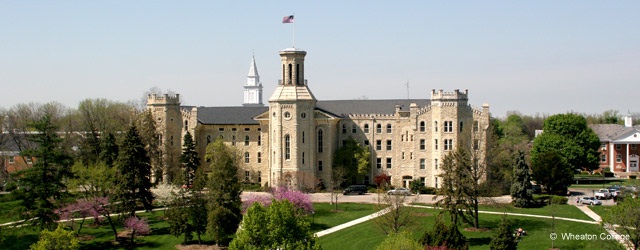
The leader of this Urbana asked Winter who would teach, what they would teach, where the classes would be, who would sponsor the program and who would cover it financially. Winter responded with the five answers two weeks later after making 200 phone calls, much to this leader’s surprise. Intervarsity reluctantly mentioned the opportunity to the card-signing students but not to their staff. Winter’s next action was to convene a meeting of fifteen mission executives in Wheaton, who were willing to constitute the sponsoring body. Most of the professors Winter asked to lecture already had their summer plans made and could only offer one week to this new program. “But that was enough—in fact, it turned out to be much better than having just one or two professors for the whole time.”

Well-known missionaries or mission professors like Elisabeth Elliott and Herbert Kane participated in the program this first summer. Each told his or her life story on the first evening, which later could not be done with a different professor teaching each lesson, one lesson per week. With the sponsors secured, Winter urged his two oldest daughters both in college then and candidates for being student participants to call students on the phone all over the nation who had in any way shown interest to tell them about the summer program being planned. They were to do this at the midnight rates, which required the phone calls to be made before 8:00 AM! Billy Graham complied with Winter’s request that he announce it on his Hour of Decision radio broadcast despite his board members’ opposition to his backing publicly any other organization. An old professor friend allowed Winter to write a full-page article announcing the course in Christianity Today with a title akin to “Is a New Student Mission Movement Aborning?”

Because of the short notice, it was a miracle that 29 students enrolled during the first period, and in the middle of this period Winter recommended the stopping of the program for one day so that the 29 very pleased students could write to and phone their friends to persuade them to come to the second period. More showed up, a dedicated group, and just enough for the program to make ends meet financially. Winter after a few weeks lined up somebody to direct the program and create a legal governing board. The second summer the former president of Mission Aviation Fellowship and one other leader were in charge. “Because of his own experience with founding new, unusual organizations, Winter was very cautious to keep a close watch on the accounts no matter who was in charge of the program so that it wouldn’t go under financially.” This evolved into the Perspectives Study Program, which has successfully provided many with a mission education.

Back at Fuller Seminary, the professors were expressing concern about all of the time Winter was taking to lay the foundation for this program. He explained that his day job was still teaching and writing and that the work on this course occurred on evenings and weekends. As a father of four daughters, he did not attend football games as many of his colleagues did and his social activities were far fewer. The fact of the matter was that it was in Winter’s heart and blood to begin new initiatives that were significant. In this first session in the summer of 1974, each professor used to teaching for a whole semester required a term paper for just their week of teaching, so the students were drowning in homework. Even though someone else was the administrator of the course, Winter still had sufficient influence to ensure the requirements asked of the students were within reason so as to save the entire program.

Wheaton College

Christian Endeavor Experiences

Christian Endeavor was a significant part of Dr. Ralph Winter’s young life in the family in which he grew up. On April 25, 1997, he received a newsletter entitled “Christian Endeavor World” with a write-up in it entitled “Hungarian Christian Endeavor.” It says that in August of 1996 for two weeks the Hungarian Christian Endeavor Union organizes two English speaking camps as part of their summer Camp Program. Numerous Endeavorers from the British Union accept the invitation and go off to a thrilling experience that helps them know more about what is happening in Hungary as it seeks to build up the work of Christian Endeavor among the young people. In 1989, most of the people who reconstitute the Hungarian Christian Endeavor Union are in their late sixties and early seventies.

The first camp attendees are primarily late teens and early twenties. Their English in some cases is poor but they are determined to give this a try. Would the camp counselors be up to the task? Each day begins with a Hungarian breakfast, morning worship, and a Bible Study with the week’s studies being from the Gospel of John. How would the counselors know if the campers are on their wavelength? First, the counselors have to speak slowly. Second, a group study follows the Bible study and the campers must answer three questions:

  1. What have we read about God today?
  2. What have we read about Jesus today?
  3. What have I read about myself today?

The reports from the campers later in the day give the counselors an idea about how well the message in English is being communicated. Alongside Bible study and worship, the counselors teach songs and choruses in English. The first day is tough but by the third day the counselors are surprised to find out that not only are campers adding to their English but they are asking questions! Every night the counselors prove to themselves with a sing-along and Gospel message that God is at work in these young people’s hearts. They rejoice as campers share testimonies on the last night around the camp fire about what God has been doing in their lives this week. One counselor writes, “[Because] it [has not been] all study, walks, games, a trip along the Danube, [and] bathing in the hot springs,…each night we [go] to bed tired but rejoicing that we…accepted the invitation to take part in their English camps.”

For the second camp, the team of counselors dwindles from five to two. This camp has much younger people as campers. The first camp’s young people had been studying English for a few years in school and college, but the second camp’s young attendees are Juniors just starting in their English studies. The counselors re-plan the program. One of them thanks God for the experiences at Junior camp in Scotland. Based on those, they plan new programs and hope they are effective. By God’s grace they are. Bible lessons are much simpler, each camper learns 12 new English words each day, and games and songs become part of the teaching. The highlight of this camp occurs on a walk in a beautiful forest area in Hungary. Counselors ask campers to collect items to use in the making of a Bible picture. The counselors wonder if the message will in fact reach the young learners. “Amen, it [does], as ‘The House Built on the Rock and Sand,’ ‘Noah and the Ark,’ ‘The Sower,’ and ‘The Burning Bush’…appear before our eyes. The last night [is] marvelous as they [dramatize] ‘The Prodigal Son’ and ‘The Good Samaritan.’” The counselors’ hearts are rejoicing. The Word of God in faltering Scottish/English gets through and they see God in the campers’ lives. It is worth all the tiredness of speaking slowly. Tears are in the young people’s eyes who attend these camps. As they say goodbye, the counselors are glad that God has enabled them in a small way to be His Servants.

Rays of light

“Hidden” and “Unreached” Distinguished

Dr. Ralph Winter wrote a letter to a counterpart of his, another mission history professor, on June 8, 2002. This professor had written a letter to Winter and mentions that he teaches about William Carey, Hudson Taylor, Cameron Townsend, Donald McGavran and Winter himself! His focus regarding Townsend is his language emphasis (translating the Bible into every language) and regarding Winter is his “hidden peoples” emphasis that commenced in Lausanne, Switzerland in 1974. Winter responds to this writer by clarifying that in 1974, he does not believe he introduced a concept as new as Townsend and McGavran’s, but rather attempted to clarify the statistical implications of what these men did. He says that McGavran’s perspective directed “missions away from unpenetrated groups toward the fostering of ‘people movements to Christ’ within societies already possessing some sort of breakthrough which he called ‘bridges of God.’” By this term, McGavran is referring to one who has sought and found Christ and worships on the fringe of another group of people distinct from his or her own. Winter points out that this perspective caused McGavran to precisely and logically not advocate the unreached peoples movement for years.

Winter goes on to write that McGavran was a loyal friend to him personally but was doubtful about expending limited mission personnel on completely unapproached groups when groups were already penetrated and needed a discipling to the fringes. Townsend emphasized the practical undertaking of translating the Bible, which is happening among already reached groups, but he also highlighted the plight of groups isolated by language differences. The focus here is not as much on church planting as on getting the Word of God into local languages. Winter desires to clarify for this colleague the meaning of the phrase “hidden peoples.” Being aware of the early thinking about bypassed peoples, Winter feels as though the term “unreached” is a poor choice because of how it has subsequently been used in the phrase “unreached people,” which refers to unconverted individuals. The need in the world, however, is about groups who do not have a viable indigenous evangelizing church movement yet. Winter thinks that World Vision is not wise in their definition of an unreached people either, this being that the group is less than 20% Christian.

Winter explains that the official Lausanne Strategy Working Group-backed definition faced immediate opposition globally on the grounds that the term “Christian” is ambiguous between the two absurd terms nominal or born again. “If ‘nominal,’ then many groups would make it as ‘reached’ which really weren’t, or if ‘born again’ then no group in the world would make it as ‘reached.’” For a brief time, the Strategy Working Group felt the pressure to speak of “born again Christians” and had to revise the percentage down to ten, five, and two. In the meantime, people at the U.S. Center for World Mission employed the term “hidden peoples” in all literature. Early in 1982, Ed Dayton of World Vision approached Dr. Winter with a proposal. If he and his staff accepted the term “unreached peoples” and gave up “hidden,” then World Vision would accept the U.S. Center’s “presence-or-absence-of-the-church” definition and would convene a meeting of mission executives suitably representing their groups to endorse that change. The meeting occurred, Winter confirms, in March of 1982 in Chicago and was sponsored by the Evangelical Fellowship of Mission Agencies and the Lausanne Committee. The change was official and Winter and his group stopped referring to “hidden” peoples although reluctantly because of the inherent disadvantages Winter sees in the word “unreached.”

OLYMPUS DIGITAL CAMERA

The Times of Ralph Winter in Guatemala

On August 11, 1963, Dr. Ralph Winter typed a letter to his parents on his typewriter. He was living in western Guatemala with his wife and four daughters, and his parents were in South Pasadena, California. He begins by writing, “Dear Mother and Daddy, The mail time is coming up and I realize that two days will go by before it is possible again to send a letter.” He has just returned from a Presbytery meeting in San Felipe on the hot coast. He slept in a dorm room at the new Seminary. One afternoon rain storm was so fierce that his stuff, which was ten feet away from a window that was only open a quarter of an inch, got wet. Thirty five men packed into a very small room without windows that looked like a shack for 6-hour sessions per day. They had to close the only door when the pouring rain diminished hope of conversation. Winter is glad to be home in San Juan Ostuncalco.

Dr. Winter and his helpers are working on constructing church benches for the Quiche Bible Institute. They have asked for seventy two. The need is to get an advance on the order quickly and to purchase $350 or $450 worth of more equipment just for this order. Winter and his crew will clear only $150 on this order, yet will then be in good condition to take further orders up to 400 more for Guatemala alone. Winter says, “Our prices are about half what others charge and the market is very extensive considering Central America with its 500 churches.” The next project along the lines of supplies is communion trays. This may sound silly to his parents, but there is a crying need for them. At this time, even the best churches have crummy ones and the small communion glasses cannot be made in Guatemala. Extra equipment will be useful for various other projects as well.

At a meeting the night before, two fellows suggested out of the blue that they want to take on resurrecting a little church up the mountain as a project. Winter is quite happy about this. Six poor men are eating on their own in the town and, Winter writes in pen in the margin, the families with whom they eat are getting tired of them. Now Winter and others want to open a small restaurant as a model business for the locals. “We already have the place, right on the square in town, and with a little corrugated iron roofing over an interior patio and a few utensils they’ll be in business—for their own needs and others. Also a washing center” [is needed in this location.] Winter acknowledges that all of this will take time. At the moment, he is writing an article for the Guatemala News while his wife Roberta is struggling with Sunday school lessons. They are also planning the September 15th exhibit in the national fair, so due to all that is going on, they may have to postpone coming home in November or December rather than October.


OLYMPUS DIGITAL CAMERA

Dr. Winter Receives The ETS Newsletter

Dr. Ralph Winter was a member of the Evangelical Theological Society (ETS), which sent out its biannual newsletter in April of 1978. The editor begins by reminding members of the inauguration of the ETS newsletter the year before as a “house organ” within ETS to serve some of the members by meeting their needs. He says, “Judging by the correspondence and comments received, many of you found that rather modest maiden endeavor helpful, even though our appeal for information received only a 6% response.” This year the Executive Committee of ETS has directed the society to plan on releasing two such letters a year, one in April and one in October. By this time, response to the appeal for information has increased to 12%, which is an energizing 100% growth rate over what it was previously. However, admittedly fourteen members responded by only signing their name and not providing actual information. The editor interprets this to be an encouragement to him in the keeping up of the percentage, for which he thanks them.

The format for the ETS newsletter will remain the same, with announcements given, reports made, and members’ publications and projects listed. The purpose is so members will remain informed about the scholarly research happening within the society, with the goal that common concerns will somehow be brought to the forefront, that cross-fertilization of ideas will occur, and an overall stimulus of evangelical scholarship will result. Should anything that members read in the newsletter stir interest and cause them to want more information, the editor asks them to use the annual ETS directory to find the address of the person involved so that they may contact him or her directly. He writes, “As editor of this newsletter I will attempt to report on the scholarly activities going on within the society, but I cannot serve as a clearing house for ideas nor a resource person for various projects.” Members are best advised to contact directly whomever they find in the newsletter’s listing to be working in their area(s) of interest.

The next issue of this newsletter will be distributed in October of 1978. In this newsletter, the last page asks for information for the October issue. The society is attempting to try this method of requesting information in the first issue for the second issue in order to save on stationary, time and postage in making that second appeal each year. “The [page] asks for the usual features, plus gives an opportunity for research students who will be available for teaching posts in the near future to list their credentials and interests.” So the editor is asking members to fill out the page and mail it back to him by September 1st for inclusion in the October 1978 newsletter.


TEE In The United States And Beyond

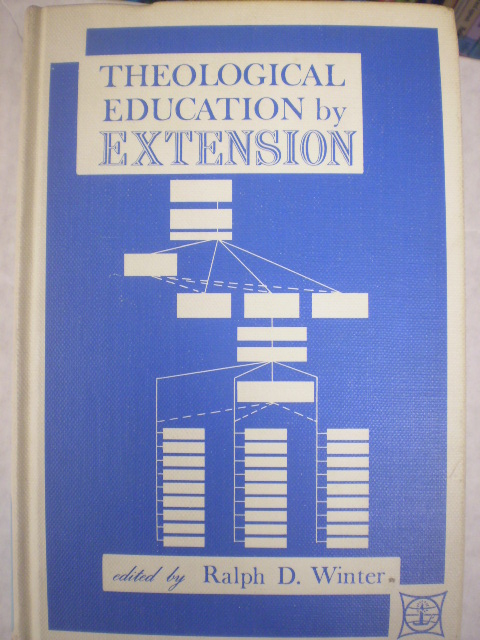
A letter was written to the representative of the Free Methodists on April 30, 1997 regarding two projects that the sender has discussed with Dr. Ralph Winter. The writer invites Winter to proofread this draft and to make corrections and suggestions for the next one. The subject is Theological Education by Extension (TEE). The writer begins by saying that Dr. Winter, one of three pioneers of TEE (alongside Jim Emery and Ross Kinsler), believes it is time to reinvent the concept. After it was created 30 years before, it thrived and reached 100,000 students until people understood that it was not occurring in the United States. Winter notes, “But now US universities have been forced by economics into extension centers and distance learning. So we have another chance to offer quality field-based education to the 80,000 who will never attend a residential university.”

The sender goes on to mention that Winter has developed two new field-based programs at William Carey International Univeristy (WCIU) in Pasadena, CA. One leads to a Bachelor of Arts and the other to a Master of Arts. These liberal arts courses provide students with a Christian perspective on history, science, philosophy, and literature. They have the Bible at the center and equip students to exegete and apply the Scriptures. Dr. Winter has offered the current professor of Christian Thought and History at Spring Arbor College the opportunity to join the staff at WCIU and “work with Free Methodist missionaries around the world to adapt these programs for their use and to help Free Methodist educational programs become models for other denominations.” The present president of WCIU will have a role like this one with the Southern Baptists starting in September of this year.

There are five goals that the Free Methodist professor hopes to accomplish through this project.

  1. Recruit three Free Methodist academic leaders to enroll in WCIU’s field-based Ph.D. program.
  2. Introduce the modular course, Perspectives on the World Christian Movement, to Free Methodist institutions who offer Bachelor’s degrees in order to raise missions awareness and sophistication. This course already has 30,000 alumni in the US.
  3. Train one leader per institution to continue to teach the Perspectives.
  4. Analyze the effectiveness and needs of current Free Methodist theological schools and extension programs, and determine in what capacity WCIU could serve them.
  5. Increase enrollment in Free Methodist theological education by 5% by way of more effective use of extension education.

wciu image

Dr. Winter Reflects On Muslims and Christians

Dr. Ralph Winter wrote an essay dated October 10, 2003 to which he gave the title “Gutenberg and the Eclipse of Islam.” He begins with a story of a three-year-old boy accidentally gashing the forehead of a playmate with a steel toy. Both children have missionary parents, and one family is visiting the other. A Moroccan family is also present. “Immediately the missionary mother of the offending boy rushed to apologize, and asked the boy who did the harm to apologize. The other mother asked her boy to forgive.” The Moroccan family is totally amazed, saying that if this had happened in their society, the two families would have never spoken again. What is the difference?, Winter asks. When Martin Luther was a leader in the early 1500s, there were as many Muslims in the world as there were Christians, despite the 600-year late start of Islam. In 2003, there are half as many Muslims as Christians. Ironically, in Luther’s day Muslims were ahead of European Christians in many intellectual, political and military endeavors. One explanation is that they inherited the riches of the Roman Empire of which Northern Europe was a very small part. So what in the world caused life for Christians to accelerate around 1500? Modern Europe rose significantly from tribalism, whereas the intellectually and educationally superior Islam made next to no progress in comparison.

Western historians do not desire to be accused of being ethnocentric, thereby exaggerating their own cultural tradition. In the West, we do everything we can to keep from thinking that our way of life is inherently superior. We remember the world wars we were involved in as well as the Holocaust. Yet others around the world just wonder how the West achieved its greatness even though it has weaknesses. Winter writes, “They can plainly see relative superiority on practically every front—educational, technical, economic, political freedoms, human rights, medical care, emancipation of women, care for the environment, etc. Doesn’t much of the non-Western world want to migrate to the West if it only could?” This curious and apparent Western superiority, which in 2003 is sharing its science and technology with the world, and leading the world in virtue as well as noticeable vice, represents a recent and considerable change.

In the age of Martin Luther, Gutenberg made possible the printing of a quarter of a million documents, three fourths of which were religious. When the moveable type was introduced to Europe in 1450, Europe was flooded with printed material over time, and the handy lingua franca allowed thinkers all over Europe, and even late 18th century America, to use Latin as a universal language. Winter argues that Islam did not gain from the moveable type because the Arabic script does not lend itself easily to discrete characters, which flow together. If Muslims had had the Bible, Winter believes they would have been diligently copying it as in Europe. So the Bible was a prime mover. The Bible brought about Luther’s concept of sola scriptura, the belief in Biblical authority as being above all else. It became a tangible touchstone which the living God used to guide, outranking all human authority. The Bible presents concepts of love, forgiveness and meekness that radically challenge unredeemed societies. “It was, in effect, the pregnant disturbance that formed the radically new modern West with all of its rare and genuine virtues as well as allowing and tolerating hostile rejection of the divine.” Winter thinks that it is the rejection of the Bible in 2003 that has caused broken families, emotionally disturbed children, and businesses and political leaders who are morally corrupt. Re-introducing the Bible is the only way to keep the West from falling into a new dark age, so Winter is encouraged about a project he is aware of to take the Bible to the heart of our cultural stream on the PBS television station.

A Unique Theological Education Consultation

On October 9, 1978, Dr. Ralph Winter was written a letter by his friend who at this time was in Geneva, Switzerland with the World Council of Churches, Unit on Faith and Witness, Programme on Theological Education. The top of the letter has Dr. Winter’s name on it, but the salutation reads “Dear Colleague.” Three entities plan to have a small consultation on “New Approaches to Leadership Development” on January 9th and 10th of 1979 at the Cook School in Tempe, Arizona. The three groups are the Cook Christian Training School, the Ecumenical Team for Continuing Education, and the Programme on Theological Education. This letter is to inform Winter about the event and to invite him to participate or suggest others who should be invited as well. Winter is one of twenty persons this letter is sent to and he suggests one gentleman as noted in his handwriting on the back.

There are various concerns that will converge and that cause the occasion to be a challenging one. The writer says, “Cook School has recently taken far-reaching initiatives in the development of theological education by extension programs among Native American peoples, and they will be holding a curriculum workshop in conjunction with the consultation (January 11-13).” The Ecumenical Team will hold its regular meeting at this same time to learn from Cook School and other programs of theological education that will be represented. Individuals representing several innovative programs both in North America (mainly Native American) and elsewhere (the Third World) are invited to give case studies at this consultation, which will think about the possibilities and problems these experiences might present for the development of leaders among minority and majority cultures in the United States and Canada.

A gentleman at the Cook School in Tempe will coordinate the activities and send out more information, so the writer states that he will give him the names of the twenty recipients of this letter. He is sad to mention they do not have funds to cover everyone’s transportation costs, only the speakers’. He writes, “If you can attend the consultation, may I ask you to stay on through January 12 in order to form part of a working group to [address] issues and strategies for the development of theological education by extension and other alternatives in the North American context.” The writer concludes by asking the persons to advise the coordinator of their interest and to kindly allow this writer to have a copy of their letters to the coordinator.

People Can Serve God At Every Age!

Ralph and Roberta Winter were on the Board of Administration of a ministry known as SERVE, which stands for Sending Experienced Retired Volunteers Everywhere. The purpose of SERVE was to mobilize retired persons into short-term mission, and this group distributed a pamphlet in the summer of 1995. It explains how SERVE was created, saying that the growing number of retirees within and without the Presbyterian Church provides a great resource of qualified people to serve in a mission role short-term. SERVE encourages ministers, missionaries and lay people to be a part of world evangelization in the United States and abroad. “When volunteers return to their home churches after short-term service, they are better equipped to assist the local parish in strategic outreach and to inspire others to participate in this ministry and also to consider long term mission.” SERVE partners with mission minded Presbyterian and reformed groups, mission agencies and parachurch entities to recruit volunteers into short-term mission opportunities. The first track followed is to match volunteers with short-term openings based on their experience and choices of geographic area and time duration. The second track followed is in developing projects and staffing.

SERVE has a variety of functions. They recruit volunteers for mission service that is short-term. They maintain a database of the short-term opportunities and volunteers available. They match the short-term mission volunteers with suitable opportunities nationally and internationally. They cooperate with Presbyterian and reformed denominations and mission agencies. They assist in developing short-term mission projects. They network, provide training and orientation, and follow up at the conclusion of the service. The mission of SERVE is to mobilize the growing number of older Presbyterians and others, both clergy and lay people, toward short-term mission. “SERVE recognizes the many opportunities for short term mission activity throughout the world and the diverse strengths and skills retired people can provide in these situations.”

The vision that inspired SERVE happened when a Presbyterian leader observed in mission conferences the many Presbyterians who responded to his invitation to serve God short term on a mission field. He consulted with Ralph Winter and a couple of others about the need to mobilize the increasing resource of qualified pensioners into mission. The reply to begin this specialized ministry was enthusiastic. Following focused prayer and discussion, SERVE was born in April of 1993. The ministry at first cooperated with the Presbyterian Church (U.S.A.) and then expanded to work with other reformed denominations and mission agencies. The volunteer staff of SERVE are deeply committed to missions. Short-term opportunities call for many tasks besides the traditional skills of ministers and missionaries. “Examples are accountants, administrators, attorneys, carpenters, communication and computer specialists, construction personnel, doctors, electricians, engineers, mechanics, nurses, paramedics, teachers, technicians, and other support personnel.” The time duration varies from a few weeks to several years. SERVE is incorporated in the state of Pennsylvania and is classified as a 501(c)(3) organization by the IRS. A SERVE fellowship is being planned for those desiring to participate in this ministry as prayer partners and supporting members. The pamphlet concludes by stating that contributions to SERVE are IRS deductible.

cross-before-two-hemispheres